
Download the entire post as PDF >
Possibility, practice, and mastery, that is how the human brain evolved. Thumbs, forefingers and tiny screens have replaced much of that. But ‘don’t worry.’ There’s no elephant in the room.
Frank Wilson author, ‘The Hand: How Its Use Shapes the Brain, Language, and Human Culture,’ begins by describing that approximately twenty-five percent of the motor cortex in the human brain (the part of the brain which controls all movement in the body) is devoted to the muscles of the hands. Frank explores the hand’s evolution–and how its intimate communication with the brain affects areas such as neurology, psychology, and linguistics–offering provocative new ideas about human creativity and how best to nurture it. One of the most interesting aspects of Frank’s thesis is something termed Kinesthetic Imagination, how the body learns, moves and imagines, as a foundation for cognitive thought and imagination. This is of particular interest as thumbs and forefingers, interacting with technology, replace whole body movements the developing brain experiences swimming in and relating to nature. Swimming in a river on a screen is not the same as swimming in a river. And this profound difference is shaping the brain and reality of humanity. See: https://ttfuture.org/adapting-to-a-toxic-culture
Nate Jones: sitting in his dusty tire shop, a backdrop for the Long Beach Formula One Grand Prix, describes how the domestication of childhood has changed the brains of the young men by changing what boys do with their hands. “We have domesticated our children by restricting what they do with their bodies and hands. A domesticated brain is fundamentally different than a wild or nature-nurtured brain. Technology compressed the living world into a two-dimensional flat experience. Since the 1990’s this flat experience has increasingly shaped the developing brains of our children.” Today AI’s automation is rendering ever-more of humanity’s sensory experience obsolete.
Marian C. Diamond, was a neuroscientist at U.C Berkeley researching the neuroanatomy of the forebrain, notably the impact of the environment on brain development, published under the title “Enriching Heredity: The Impact of the Environment on the Anatomy of the Brain.” Marion described; “There are a hundred billion nerve cells in a brain and many of those nerve cells can make connections with thousands of others. The brain is responding to the external environment and to the internal environment at all times. The nerve cells are designed to receive stimuli, store information and transmit information. Every cell receives input from both the internal and the external environment at all times. We’ve shown that we can physically change the brain by changing the internal and external environments at any age.”
Let that sink in. “We can and are physically changing the brain by changing the internal and external environments at any age.” A fine definition of Epigenetics. Gene expression is model-environment dependent. Change the environment and we change the brain. Form is content. Use it or lose it.
Like all life, human beings emerged from, and express ‘nature.’ Our nature governs if we adapt well to the rapidly changing environment, or not. By many measures, childhood wellness and longevity for example, we are not doing very well.
In her seminal book ‘Neurobiology in the Development of Human Morality, Evolution, Culture and Wisdom,’ Darcia Narvaez, Professor of Psychology Emerita, University of Notre Dame, reminds us that what we see today, how we interact with children and nature, what we think is ‘normal,’ is actually very abnormal. “But unfortunately, the people who are abnormal are the ones that are spreading their view of the world and redefining what is normal. As if its normal to be selfish and always thinking about what you can gain for yourself. That’s a very primitive morality.”
Darcia is a prominent American psychologist known for her work on moral development, human flourishing, and the “Evolved Nest,” a framework describing the caregiving practices that support optimal wellbeing. Her research blends neuroscience, anthropology, and developmental psychology to explain how early-life environments shape moral orientation and lifelong health. She uses the term ‘species typical,’ to describe what is really ‘normal.’ Only one-percent to five-percent of humanity’s evolution occurred during the past 10,000 years, what we call civilization. Ninety-nine percent evolved prior to large scale farming and domestication of animals.
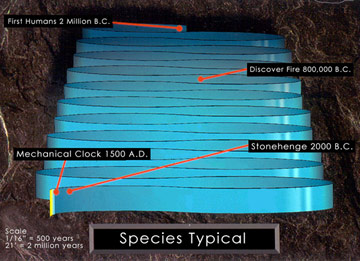
The teal ribbon above gives some indication of what ‘species typical’ means. Change occurred very slowly. Not today. The yellow tip at the end of the teal ribbon represents recent history. Change the environment and the brain changes with it.
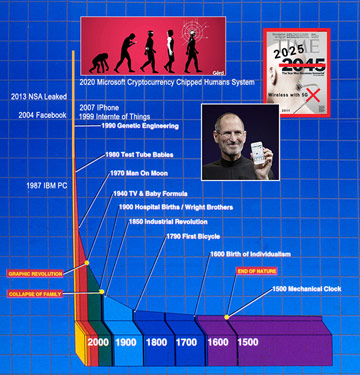
Darcia uses the term ‘under care,’ to describe our sensory deprived norm. One simple example:
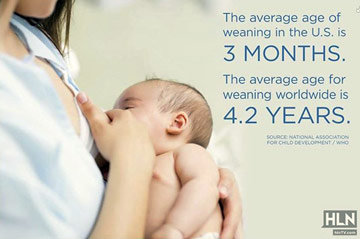
Another:

Of his more than fifty books authored by Ashley Montagu, one “The Dehumanization of Man,” 1983, resonates. Quoting Emmerson, Ashley writes;
“We must look deeper for our salvation than to steam, photographs, balloons, or astronomy. Yes, we have pretty artillery of tools in our social arrangements; we ride four times as fast as our fathers; travel, grind, weave, forge, plant, till, and excavate better. we have new shoes, gloves, glasses, and gimlets; but where are they taking us? These tools have some questionable properties. They are reagents (agents that change humanity). Machinery is aggressive. The weaver becomes the web, the machinist a machine. If you do not use the tool, they use you. All tools are in some sense edge-tools, and dangerous.
The mechanization of life could be complete only with the mechanization of man (humanity)… The last refuge of the secret (interior) life, the deepest hidden recess of spontaneith and freedom, must be infiltrated, subjugated, and recycled into conformity with the technological society. Man, in effect had to be emptied out of essential humanity in order to be restocked with artificial needs and scientifically conditioned reflexes.
The dehumanization of man, initiated from without, would be finally accomplished when the individual accepted his fate and completed the process from within, by voluntary acts of compliance and conversion.
Joseph Chilton Pearce often described how; “Entire capacities can be lost (due to a loss of modeling) in a single generation, and the newest members won’t even recognize what has been lost.”
I asked Jerry Mander what his Four Arguments for the Elimination of Television-Technology are, published in 1978. Today its 2026.
J: The first is Environmental. The second is Political. The third is Personal in terms of personal consciousness. And the fourth deals with Communications, what kinds of information pass through the media, and what kinds don’t?
The environmental argument is based on how we have moved our consciousness inside artificial forms – from the natural world to that of a mediated reality. Television has a major role to play in the mediation of consciousness, the mediation of reality.
The political argument explores how the use of advertising and television-technology benefits some people more than other people. Advertising and television-technology provide an extremely powerful tool unify consciousness, which is more immediate, more direct and faster than anything that proceeded it.
The third argument describes how television effects people. What it does to kids. What it does to the way we understand ourselves. What it does to thinking. What it does to us psychology.
The fourth argument explores how television threatens democracy. Television-technology accepts certain kinds of information while rejecting others. Conversations like this would be boring on television and yet violence, sex and sports work well. The medium has a built-in bias.
M: How does this bias affect our experience and the programs we see on television?
J: Television exploit a genetic fight-flight tendency in human beings. Our most important skill when living in a pre-industrial environment was the ability to react to things that were unusual. We had to be aware of changes in the environment for survival. Television comes along and presents images which triggers the same genetic response. If something violent is happening on television, we will react. We may be intellectually aware that the violence is not “real” but our emotions don’t discriminate. They react. It is part of our survival reflex and advertisers and programmers exploit this tendency as much as possible.
M: To exploit means to use something to one’s advantage or to take advantage of another weakness.
J: It became very clear, observing my kids watching television, that they were entering a entering into an artificial reality, one where people no longer remember what the world was like without television-technology. It is a reality cut off from the natural world – one created and controlled by a limited number of corporations to sell people products they really didn’t need.
Immorality is an intrinsic aspect of corporate activity. There’s no avoiding the fact that corporations are operating by certain rules which they have to follow. They have to grow. They have to prosper. They cannot express moral feelings. There is competition, hierarchy. Corporations are intrinsically connected to the exploitation of nature. Nature is considered a resource to be converted into products. You can get very good people working in corporations who are unable to do good things because they have to follow the form of the corporation. Anybody who’s working in a corporation that’s trying to sell products to kids will use whatever techniques they can think of.
I was very, very worried about that and with good reason. We already have a generation of people who don’t know that there was ever a world without a television. They can’t imagine what life would have been like without television. Look how we have moved through the technological age and how it has established a new reality that has no relationship to the intrinsic values of nature. This is tremendously tragic and the main reason I wrote the book.
As AI automation exponentially replaces ‘species typical’ human nature, and nature itself, as the ‘model for brain development and morality,’ don’t worry, given the hypnotic, addictive power of technology to enchant, most of us, and certainly our kids, won’t recognize what has been lost.
Michael
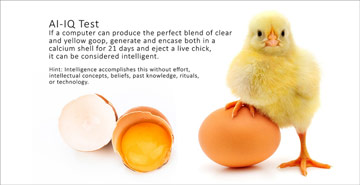
AI Mimics Human Intelligence?
Only if you are half-brained.
Darcia Narvaez, PHD.
If you have any sense of embodied wisdom, experiences of oceanic feeling of oneness with All, any deep social and emotional intelligence understanding the complexity of face-to-face responsive human relationships, or any working creative artistic bones—all of which means your right hemisphere is working at some level—you likely cringe at the thought of people thinking that AI mimics human intelligence. Far from it.
AI is capturing the attention of many because we have so dumbed down human potential that it seems as smart or smarter than humans. It’s because we’ve been encouraged to lose half our minds.
In a well-functioning brain, the right hemisphere picks up, through a plethora of senses and whole-body immersed experience, how the real world works in relation to the self. (This requires lots of self-directed playing with diversity—different ages, genders, contexts—throughout childhood. Sitting with screens does not do it.)
The RH then passes these impressions to the left hemisphere (LH), an isolated ivory tower magician that picks out patterns and makes generalizations. The LH then passes those generalizations back to the RH for assessment of veridicality. The RH tosses out the distortions (but only with adequate life experience). Individual knowledge/wisdom/knowhow is transformed by this dynamic process.
RH is the seat of emotional intelligence, relational intelligence, self-control, embodied awareness, and the true self.
This back-and-forth process has been failing across industrialized capitalism for centuries. Left-brain confabulations have taken over—that the world is empty of spirit, that what is valuable can be calculated on a spreadsheet or through logical analysis, that humans are making life-enhancing progress, and so much more.
These days we so undercare for babies during critical periods that we’ve commonly impaired their brain development. For example, we distress them even purposefully (e.g., with sleep training; separate sleeping; out of arms most of the day) when their right hemispheres are scheduled to grow more rapidly (till age 3 years or so) in coordination with carers. But RH development is undermined by undercare (lack of the evolved nest).
Distressing babies by not providing the evolved nest undermines basic physiological functions, even the mitochondria that through ATP provide the metabolic energy for growth (Naviaux, 2008). Dysregulating events during accelerated right brain growth create alterations in metabolic energy, impairing the ANS, HPA axis, immune, and cardiovascular systems (McEwen & Wingfield, 2003).
This is the period when attachment is set up to be disorganized, organized insecurely or, hopefully, organized securely. Attachment scores are a superficial signal of whether the early months and years have gone well enough for social fittedness. Attachment scores are not measuring RH relational right-brain-to-right-brain functioning.
Virtually all mental illness comes from the undermining of the RH development prenatally (from maternal stress) or postnatally during this period, and boys are affected more (Schore, 2025).
After the critical period for RH growth in the first nearly three years, the LH growth spurt begins. This is the seat of ego consciousness, the confabulator.
If the foundations of the true self in the RH are weak from undercare and toxic stress, the LH takes over with a false self to protect the weakling, for better or for worse. Narcissism of various kinds emerges here.
We exist in a culture of increased confabulation and narcissism and decreased relational intelligence and wisdom.
Confabulation is when someone fills in gaps in memory with information that feels true to them but isn’t actually accurate. The key is that it’s not lying. There’s no intent to deceive. The brain is essentially improvising to make a coherent story.
To heal, we restore the evolved nest and revamp our worldviews.
References
McEwen, B. S., & Wingfield, J.C. (2003). The concept of allostasis in biology and biomedicine. Hormones and Behavior, 43, 2-15.
Naviaux, R.K. (2008). Mitochondrial control of epigenetics. Cancer Biology and Therapy, 7, 1191-1193.
Ray, D., Roy, D., Sindhu, B., Sharan, P. & Banerjee, A. (2017). Neural substrate of group mental health: Insights form multibrain reference frame in functional neuroimaging. Frontiers in Psychology, 8, 1627.
Schore, A.N. (2025). The Right Brain and the Origin of Human Nature. W.W. Norton